
The brief.
Build a "dollar account" that feels like a fintech app but runs entirely on-chain — no custody, no seed phrases, no crypto homework for the user. Sign in with an email, get a dollar balance, and do real things with it: send money anywhere, earn yield, borrow, invest, trade. The hard part isn't any single feature. It's making all of them feel like one calm product.
A neobank where the bank is a smart wallet — and the user still holds the keys.
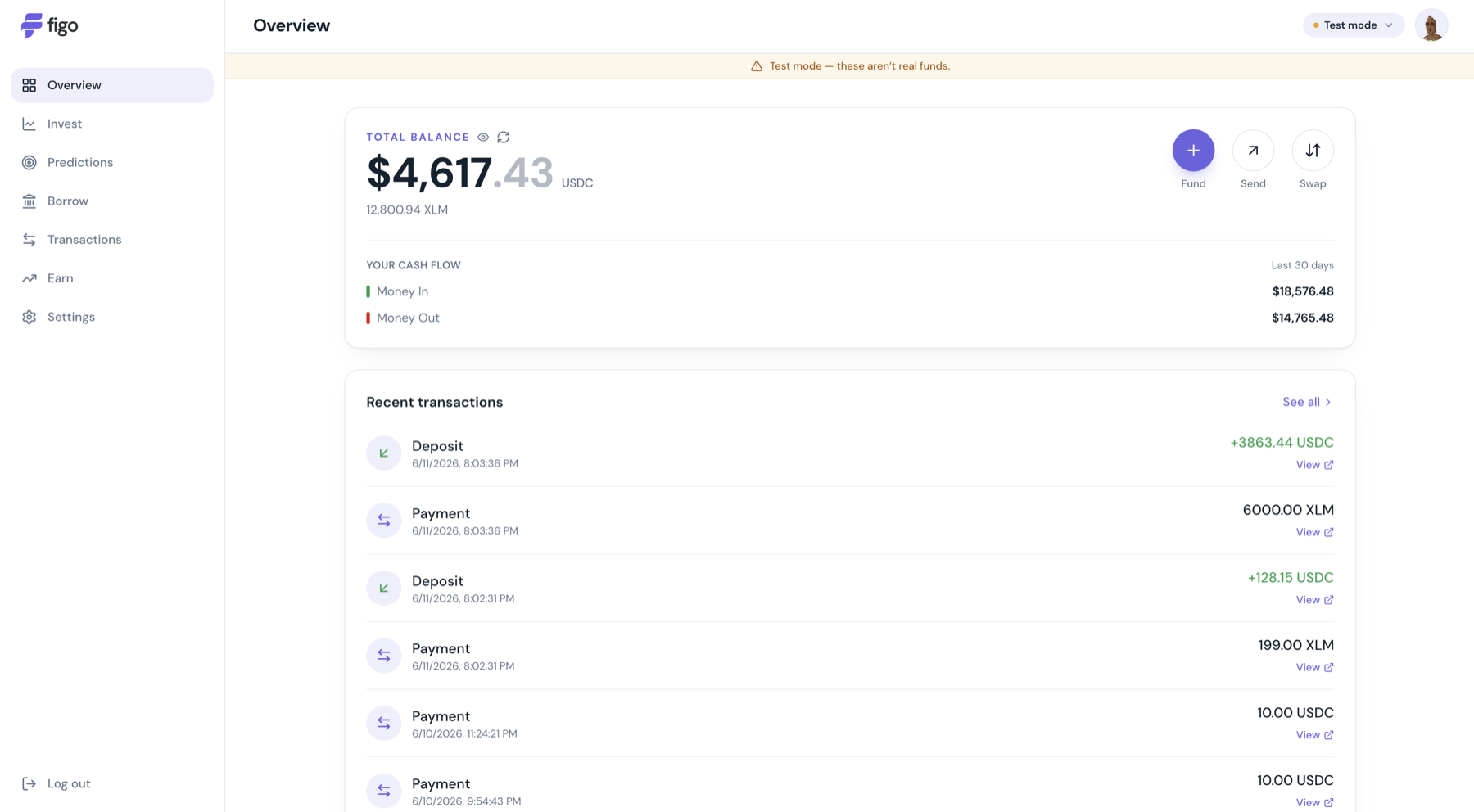
A wallet in seconds.
Onboarding is just email. Behind it, every user gets embedded wallets provisioned through Privy's MPC infrastructure — separate keypairs for Stellar, Solana and EVM chains, each created and signed inside a secure enclave. No browser extension, no twelve words to write down, no way for us to touch the funds. Non-custodial isn't a footnote here; it's the architecture.
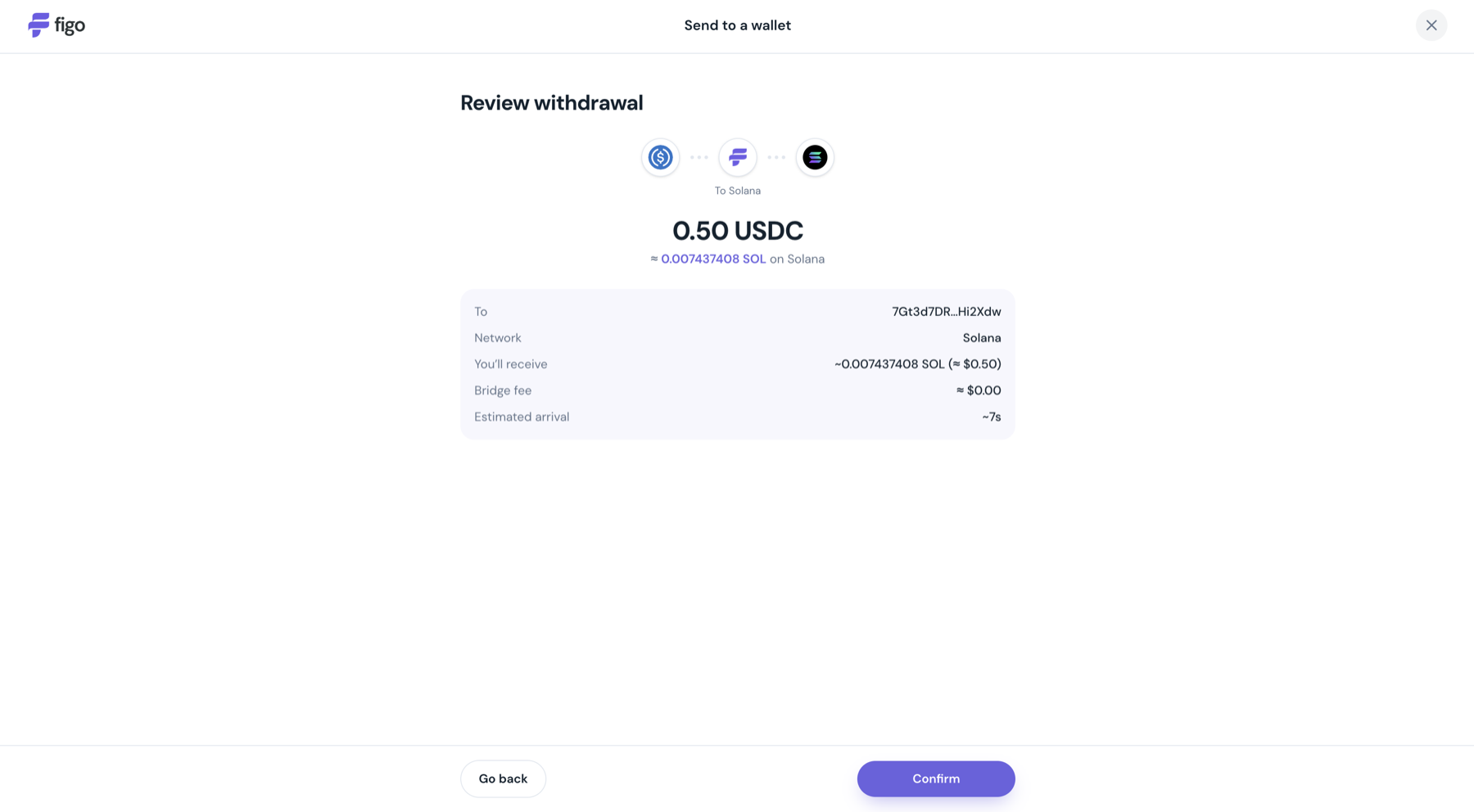
Money in, money out — across 30+ networks.
A dollar balance is only useful if money can reach it. Figo bridges value in from Ethereum, Base, Solana, Polygon, Tron, Bitcoin and more — and from a regular bank transfer — settling it all as USDC on Stellar. Sending works the same way in reverse: pay any wallet on any supported network, or cash out to a bank, with the exact rate and fee shown before you confirm. The cross-chain routing runs on NEAR Intents; the user just sees "add money" and "send".
Then we made the dollars work.
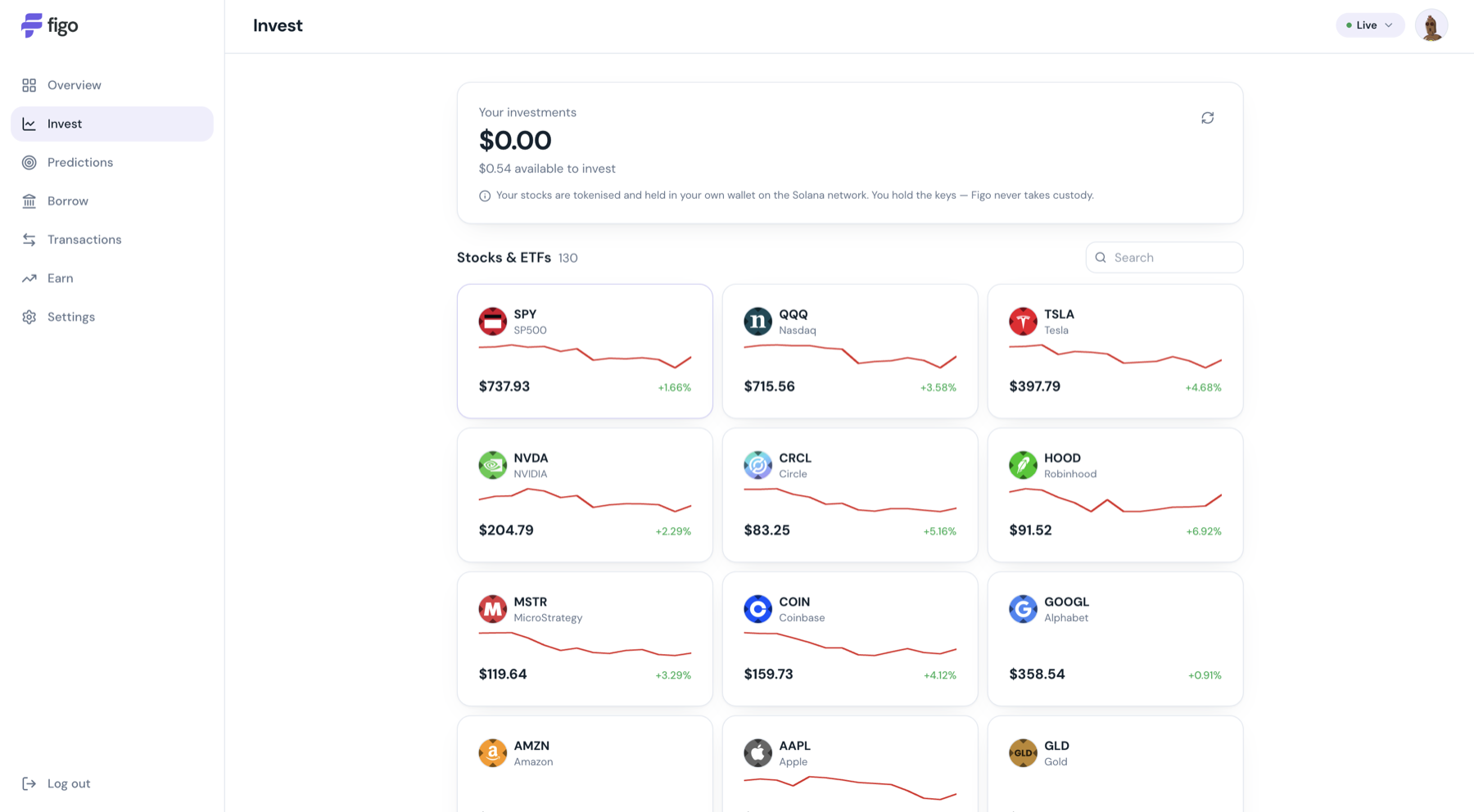
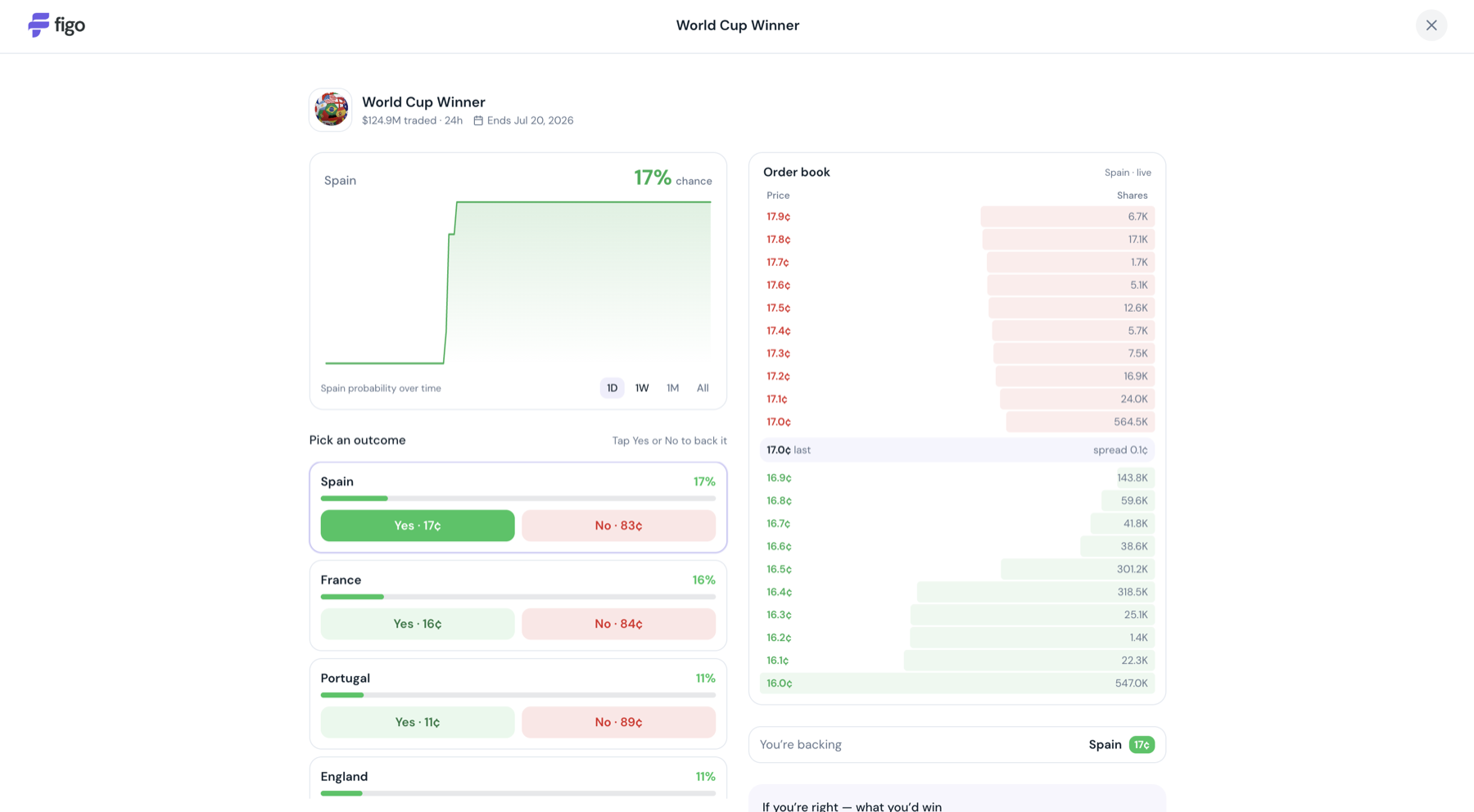
This is where Figo stops being a wallet and starts being a bank. Four products, all drawing from the same balance, all non-custodial:
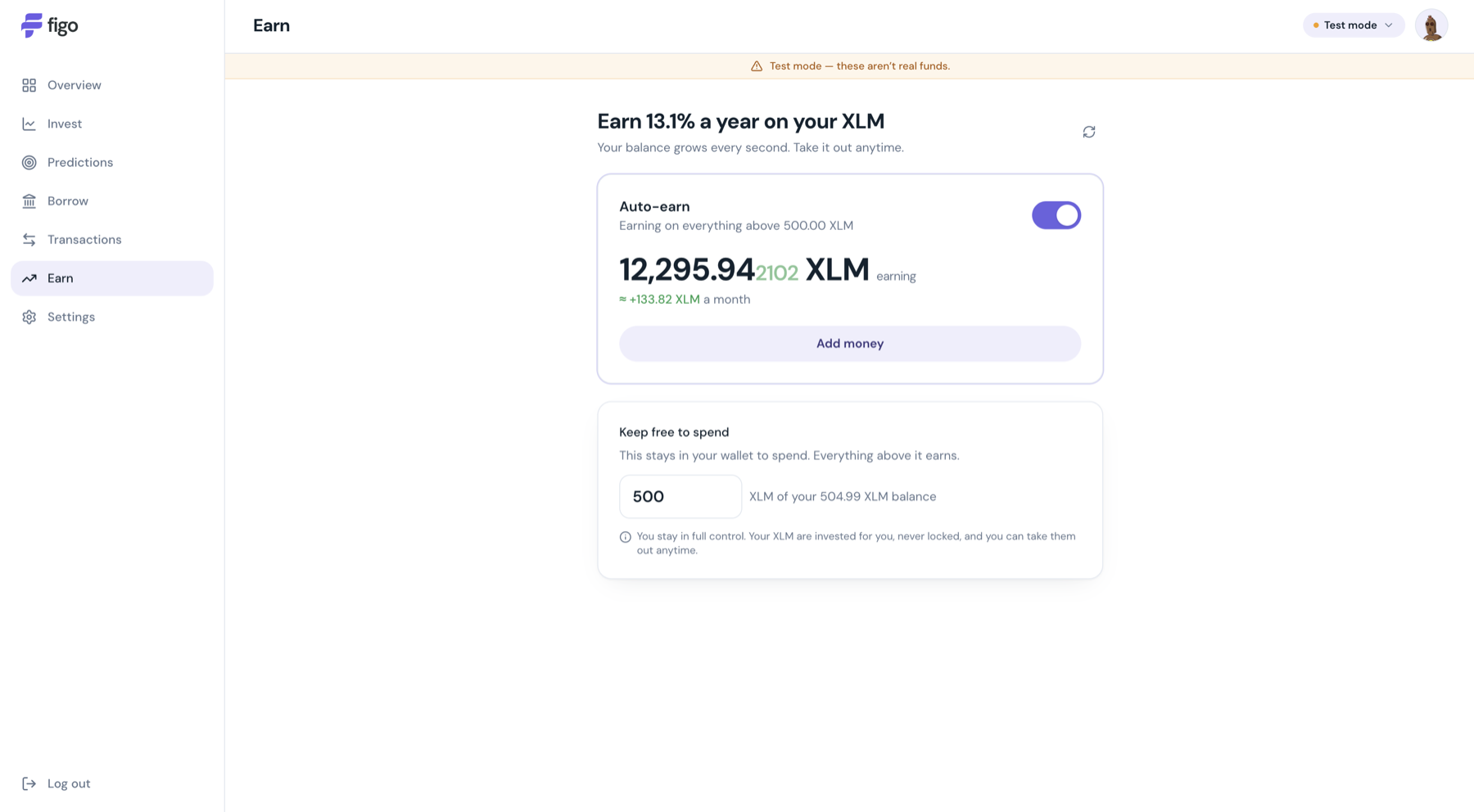
- Earn — idle dollars are deposited into audited Stellar DeFi vaults (DeFindex) and accrue yield by the second. Withdraw anytime.
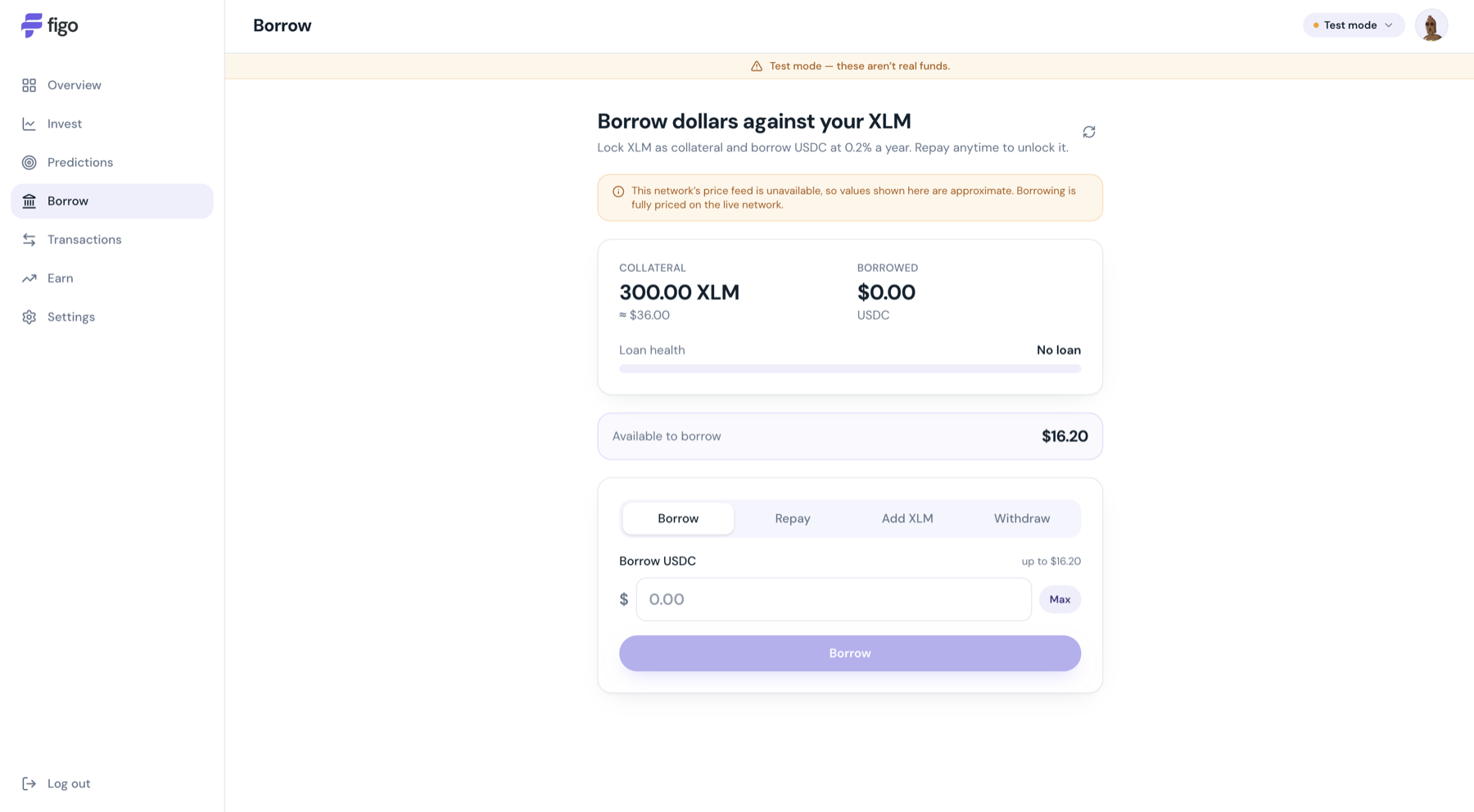
- Borrow — post XLM as collateral and borrow USDC against it through an on-chain lending market (Blend). No credit check, no selling your crypto, health factor shown before every move.
- Invest — buy tokenised US stocks (Apple, Tesla, Nvidia and more) fractionally, 24/7, settled into the user's own Solana wallet via Jupiter. We added cost-basis tracking so every holding shows real profit and loss.
- Predict — trade real-world prediction markets (elections, sports, crypto) with live odds and order books, powered by Polymarket, with a positions-and-winnings view.
The engineering underneath.
Every screen is one product, but under the hood it's three chains and half a dozen protocols speaking at once. The pattern that kept it sane: orchestrate on the server, sign on the client. The backend builds every transaction, quote and route; the user's embedded wallet signs it; nothing custodial ever sits in the middle.
- NestJS + MongoDB backend; Next.js 16 / React 19 / Tailwind front end.
- Three embedded wallet curves per user (Stellar ed25519, Solana, EVM secp256k1) via Privy.
- Real integrations, not mocks: NEAR Intents, DeFindex, Blend, Jupiter, Polymarket.
- Cross-chain bridging that hides every hop behind "add money" / "sell".
What it proves.
Figo is the whole Jevan thesis in one product: take something genuinely hard — custody, multiple chains, live DeFi — and turn it into something a person can use without thinking about any of it. Not a brochure. A product that ships and does real things with real money.